Can I love people without telling them everything?

Can I Love People Without Telling Them Everything?
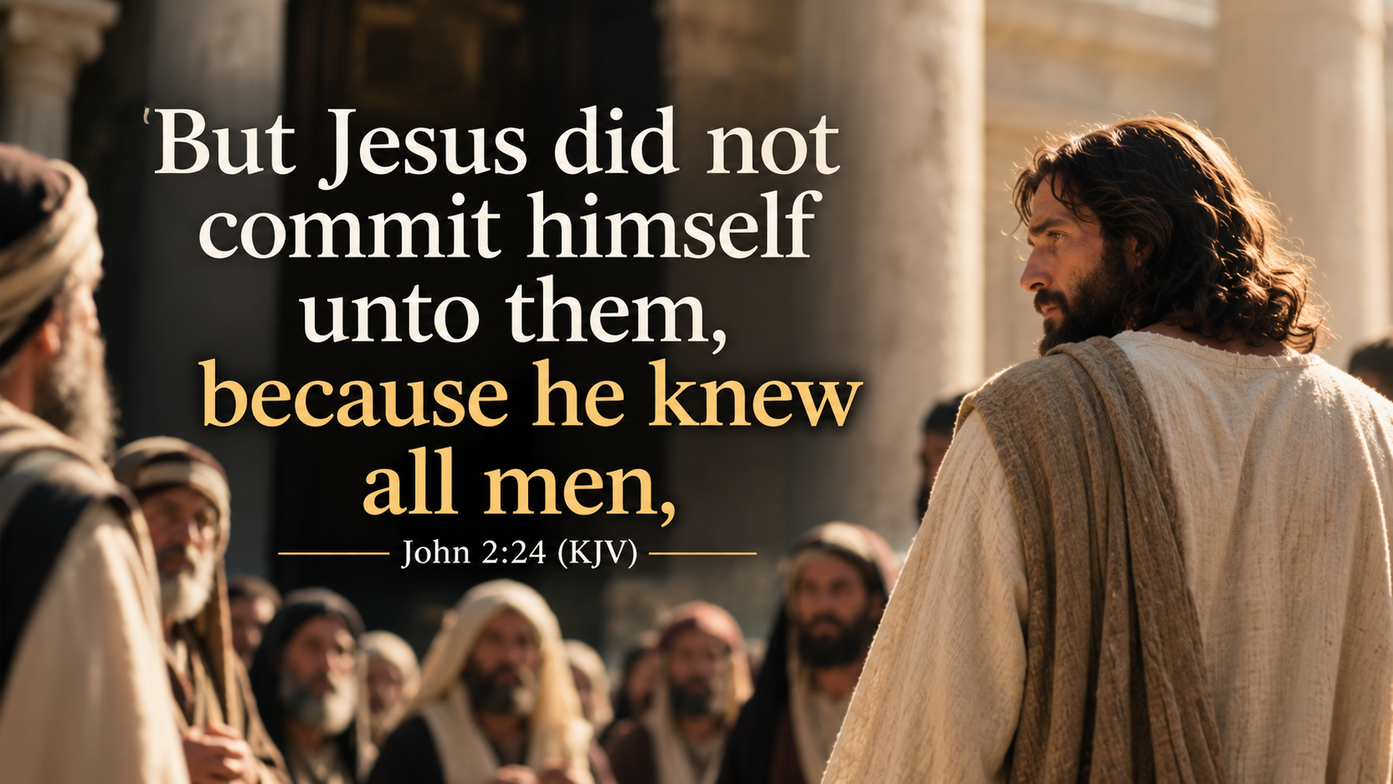
“But Jesus did not commit himself unto them, because he knew all men,” John 2:24 (KJV)
Love doesn't require full access.
A lot of us feel guilty when we keep something private. We worry that a boundary makes us cold or dishonest, especially when the person asking is somebody we care about.
We can end up sharing more than we wanted to because we don't want that person to feel rejected.
In John 2, people had seen the miracles Jesus performed and believed in His name. Yet Jesus didn't entrust Himself to them.
That's what "commit" means here. He knew what was in their hearts, beyond the enthusiasm they showed.
We don't know people's hearts the way Jesus does. This passage doesn't give us permission to assume everybody has bad intentions just because we feel nervous.
It helps us see that caring for someone and entrusting ourselves to them are different decisions.
You can love everybody without trusting everybody with the same things.
A family member may genuinely care about you and still have a habit of repeating private conversations. You can appreciate their concern without sharing details you aren't comfortable having passed along.
Keeping those details private doesn't mean you have to lie or stop caring about them.
Trust grows through what a person does over time. Someone who respects your no gives you a reason to consider sharing more.
If they keep pressing after you've answered, it's worth pausing before you share anything else. We don't have to know everything in a person's heart to pay attention to how they treat what we've already shared.
Privacy can also become an excuse to avoid the help we need. If somebody is abusing or threatening you, or a child is in danger, tell a trustworthy person who can help protect you.
Keeping that information hidden isn't a healthy boundary. If we're using privacy to continue something harmful ourselves, we need honest help with that too.
Jesus already knows everything you're trying to protect, including the parts you can't explain yet. His love doesn't depend on how well you tell your story.
We can keep loving people while choosing carefully who we ask to help carry our private struggles.
When Someone Asks for More Than You Want to Share
Before answering a personal question, pause and consider whether sharing would help and whether this person has handled private matters with care.
You don't have to offer your deepest pain to find out. You can begin with something smaller and let trust develop over time.
If a family member asks about something painful you're working through, you might say, "I love you, but I'm keeping those details private." If they keep pressing, you can answer, "I'm not ready to talk about that, but thank you for caring."
Your answer can be warm and still have a boundary. You don't have to keep explaining until they agree.
If you do need support, choose someone equipped to help, such as a trustworthy pastor or counselor. You can begin with, "I'm having a hard time, and I need help talking through it."
Choosing who hears your story allows you to receive help without giving everyone access to it.
PRAYER
Father God, I've sometimes shared more than I wanted to because I was afraid someone would think I didn't love them.
Today I release the guilt that says love requires full access.
Help me answer honestly and kindly, even when someone is disappointed with my answer.
Give me wisdom about whom to trust and courage to speak when I need help.
Keep me from shutting everyone out because I'm afraid of being hurt.
Thank You that I'm fully known by You and still loved.
In Jesus' precious name we pray. Amen.