Does God change His mind?

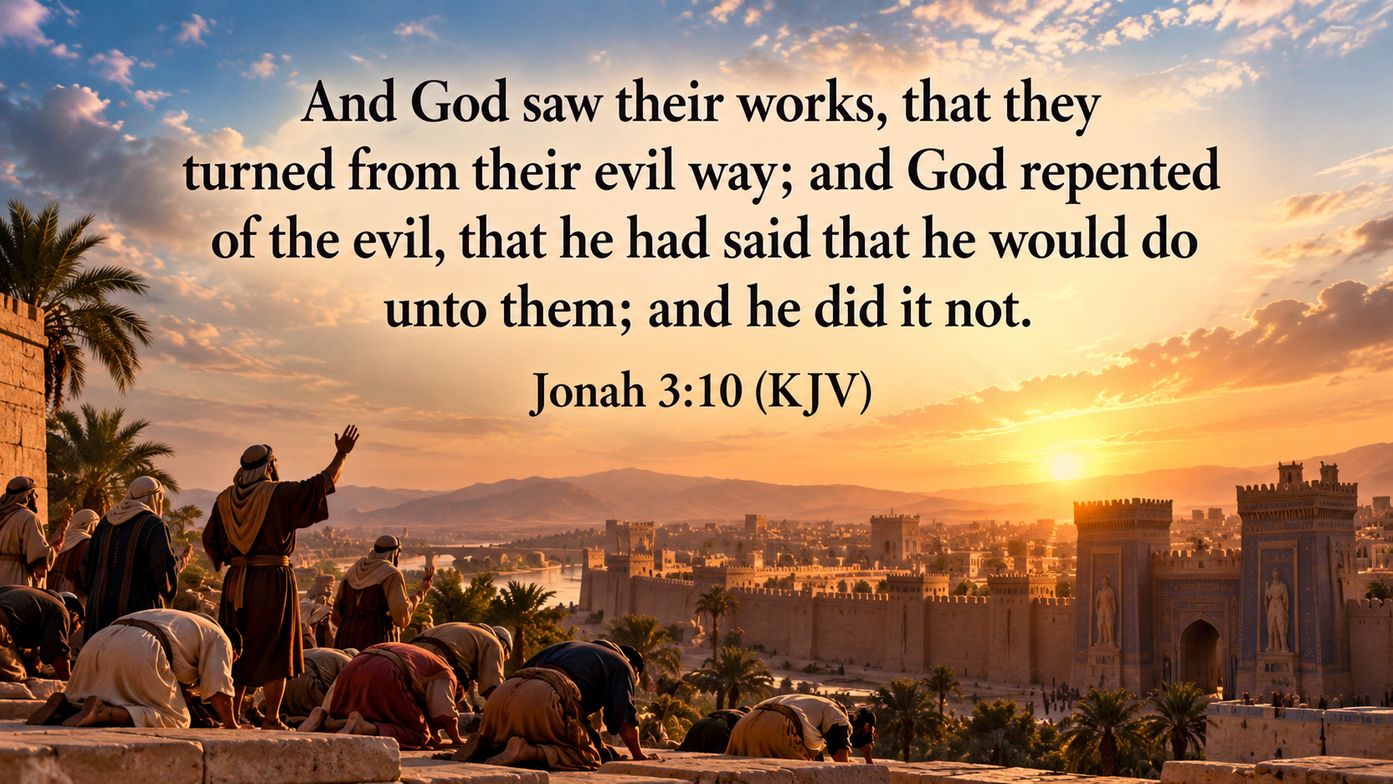
Does God Change His Mind?
God warned that Nineveh, a city He was confronting for its wickedness, would be destroyed. Then He spared it.
We can read that and wonder how we're supposed to trust what God says if He later does something different.
That question makes sense, especially when the verse says God repented.
We usually connect repentance with somebody admitting they were wrong. Was God correcting a mistake?
Jonah, the prophet God sent to warn Nineveh, announced that the city would be overthrown in forty days. The people believed God.
Even their king humbled himself and called on everyone to turn from their evil ways and the violence they were committing. God saw that they turned and withheld the destruction.
In this verse, "repented" means God changed course concerning the disaster He'd announced.
The word "evil," when it describes what God would bring upon the city, means disaster. It doesn't mean God had planned to commit a sin and then thought better of it.
God changed how He dealt with people who'd turned from evil. His mercy was already part of who He was.
Jonah's reaction helps us understand that. He was angry that God had spared the city.
In his prayer, he explained why he'd tried to avoid going there in the first place:
"And he prayed unto the LORD, and said, I pray thee, O LORD, was not this my saying, when I was yet in my country? Therefore I fled before unto Tarshish: for I knew that thou art a gracious God, and merciful, slow to anger, and of great kindness, and repentest thee of the evil."
Jonah 4:2 (KJV)
We might expect Jonah to celebrate when the people listened to God and their lives were spared. Instead, he was upset about the very mercy he'd known God could show them before he ever delivered the warning.
God hadn't suddenly become kind. Jonah was struggling with that kindness reaching Nineveh.
But why give a warning of destruction if God was willing to spare the city?
God explains that connection through another prophet, Jeremiah. He's speaking about a nation He's warned of judgment:
"If that nation, against whom I have pronounced, turn from their evil, I will repent of the evil that I thought to do unto them."
Jeremiah 18:8 (KJV)
The warning gives people an opportunity to respond. God says that when a nation turns from evil, He'll withhold the disaster He announced.
Treating the warning as something that must happen regardless of their response would ignore the condition God gives here.
Nineveh's violence mattered, and the people needed to turn from it. Sparing them when they did was consistent with the mercy God had already expressed.
We can't turn this account of a city being spared into a bargain where better behavior guarantees the circumstances we want. Nor does it teach that we earn salvation by improving ourselves.
Jesus died for our sins and rose again. His finished work means He has done what was needed to save us, and we receive that salvation by faith in Him.
An apology or a changed habit doesn't pay for our sins or add to what Jesus accomplished. We can take God's correction seriously without treating our response as a payment He owes us something for.
Did God change His mind? In Nineveh's case, He changed the announced outcome after the people turned from evil.
He wasn't discovering a moral mistake or becoming merciful for the first time.
This passage doesn't settle every question we might have about how God knows the future, but it shows us why He spared this city. We have reason to take His warnings seriously and to come to Him rather than assume He won't show mercy.
Taking God's Warning Seriously Today
When Scripture challenges a choice you're defending, pause before explaining why it doesn't apply to you.
If you've been justifying hurtful words, for example, consider what you said without immediately listing what the other person did first.
Ask God to help you receive His correction, then acknowledge the harm in an apology without demanding that they apologize back. You can respond to correction even while the relationship remains difficult.
If fear tells you there's no point coming to God, read Jonah 3:10 and compare that feeling with how God responded to Nineveh.
Bring God the struggle you've been avoiding, and ask for His help with it. You don't have to know how every circumstance will turn out before you trust His heart.
PRAYER
Father God, I sometimes defend what needs to change because I'm afraid of what Your correction will mean.
Thank You that Your mercy isn't something I have to talk You into.
Today I stop treating my response as a bargain and trust the salvation Jesus has already provided.
Help me be honest about the harm I've caused and willing to make it right, even when I can't control how someone responds.
When fear makes me want to stay away, help me come to You.
In Jesus' beautiful name we pray. Amen.