How to tell if it’s correction or condemnation

How to Tell If It's Correction or Condemnation
Have you ever felt offended or even wronged when somebody spoke about your sin? You know they didn't intentionally try to hurt your feelings, but they mentioned something that was very vulnerable for you, and you started to feel some type of way about it.
Sometimes it takes a couple of days. Sometimes it even takes a couple of weeks. And you start to replay it in your mind. It either gets heavier or it makes you feel less than each time you think about it. Then you end up at this position where you start to question yourself.
You ask yourself things like, "Is this God getting my attention and convicting me, or was this person just being super cruel towards me and my situation?"
Trust me, guys. I've been there. And many of you guys, especially the ones who've spent any time in church, have been there too. Always wondering why a word or correction like that sticks around for weeks. Why does it make me want to run away and even hide from God? And how am I even supposed to know whether to take it in or let it go?
But I learned something. The Holy Spirit, through conviction, will always lead you back to God. It's the same battle here, whether it's internally or externally, coming from somebody who's either a friend or a pastor, or even your own family member.
Condemnation always pushes you away from God. This is the first and biggest unlock on how to test the spirit.
Because correction and condemnation use pretty much the same words. On the surface level, they both bring up your sin. They both make you feel a little bit burdened by the weight of that sin. And that's what makes it difficult, because they sound so much alike.
But I learned that when the Holy Spirit is convicting you, He's always pointing you back home. Back to Jesus. Yes, you will feel the weight of what you did. But underneath that weight, you can sense God calling you back and pulling you closer.
Condemnation just makes you sense the weight, and it literally crushes you. It's often very accusatory too, telling you that you're too dirty to even look up at God.
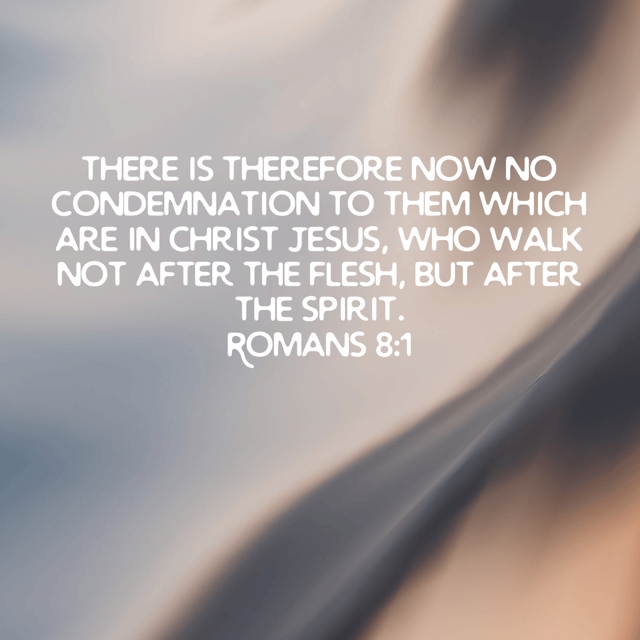
The word "condemnation" in Romans 8:1 is very deep. In the Greek, it's "katakrima." It means a verdict with the punishment attached. A sentence with consequences. But what's amazing and beautiful is that Jesus already served that sentence for us. On the cross He said, "It is finished." Meaning the sentence of death, the sentence of paying for your sins, was already completed.
So when you hear a voice that sounds convincing but keeps trying to put you back into the chains, pulling you away from the One who broke those chains, that voice is not coming from God. It might even come from a person. It can even come from your own brain. But it definitely did not come from Jesus, the Holy Spirit, or God.
The second thing I've learned to check is the person doing the talking and correcting.
Correction always requires humility from the person who is giving it. Condemnation will feed the ego of the person who is delivering
Paul sums the whole heart behind this idea into one verse:
"Brethren, if a man be overtaken in a fault, ye which are spiritual, restore such an one in the spirit of meekness; considering thyself, lest thou also be tempted."
Galatians 6:1 (KJV)
Notice how Paul says restore, not expose. In the spirit of meekness, considering yourself. That's the blueprint right there.
Paul's goal is restoration. Walking somebody back home. The first person he tells you to check is yourself. You go in with understanding. It doesn't have to be gentle, but you also have to have humility, because you know full well you could be the one overtaken tomorrow.
I often think about the woman caught in the act of adultery (John 8).
They dragged her out in front of everybody, stones ready in their hands, and they wanted to make an example out of her. But Jesus knelt down and started writing in the dirt. When He stood up, He didn't go to grab another stone or yell at her. He just said, "He that is without sin among you, let him cast the first stone at her."
And one by one, they all walked away from Him, until it was just the two of them in the midst.
Jesus was the only One who could actually throw a stone. But even He withheld that power and judgment towards her. Instead, He told her, "Neither do I condemn thee: go, and sin no more."
Notice how Jesus never once made her feel like she was past saving. That's correction with restoration. Truth and a way home, from somebody who's truly willing to help.
Here's how to deal with condemnation.
Step One. When something that sounds harsh is presented to you, slow down before you decide what to do with it. Sit with it for a second and ask where it's pointing you. If it makes you want to get honest with God and get close to Him again, that's a sign it came from the Holy Spirit. You can take that in, even though it stings, because the heart behind it is restoration, not exposure.
Step Two. If you feel like it's pulling you away from Jesus and more into works or isolation, then it's important to stop, open your mouth, and go to God. Ask God to show you if this is for restoration, or if it's to feed another person's ego, including your own. This is how you sort your own heart, like Paul said, considering yourself.
Step Three. Learn the difference between keeping it real versus keeping it scriptural. Real and helpful aren't always the same thing. Before the words leave your mouth or another person's mouth, ask if there's any grace in them. If there's any way back to the One who will heal and help you, which is Jesus. If there isn't, then you can disregard it and not really take it to heart.
PRAYER
Father God,
I've gotten these two mixed up more times than I want to admit, on both ends of it. I've taken cruelty as if it came straight from You, and I've handed out cruelty while I told myself I was doing Your work.
Teach me to know the difference.
When a hard word actually comes from You, help me stay soft enough to take it, even when it hurts. When it's just somebody dressing shame up as truth, remind me the sentence is already served, and let me stand on Romans 8:1.
Before I'm ever the one doing the talking, get my own heart right first.
Help me tell the truth the way You told it to the woman in the dirt, with a way home built into all of it.
Thank You that there's no condemnation left for me in Christ.
In Jesus' precious name we pray.
Amen.