If God already heard me, why keep praying?

If God Already Heard Me, Why Keep Praying?
Jesus tells us to keep praying. He also warns us against vain repetitions.
How do we follow both? If we've already asked God for help, should we bring it up again or trust that He heard us?
We can do both. The difference is why we're asking again.
We can return to God because we trust Him with a need that's still there, or we can keep speaking because we think enough words will finally get His attention. Jesus helps us recognize the difference.
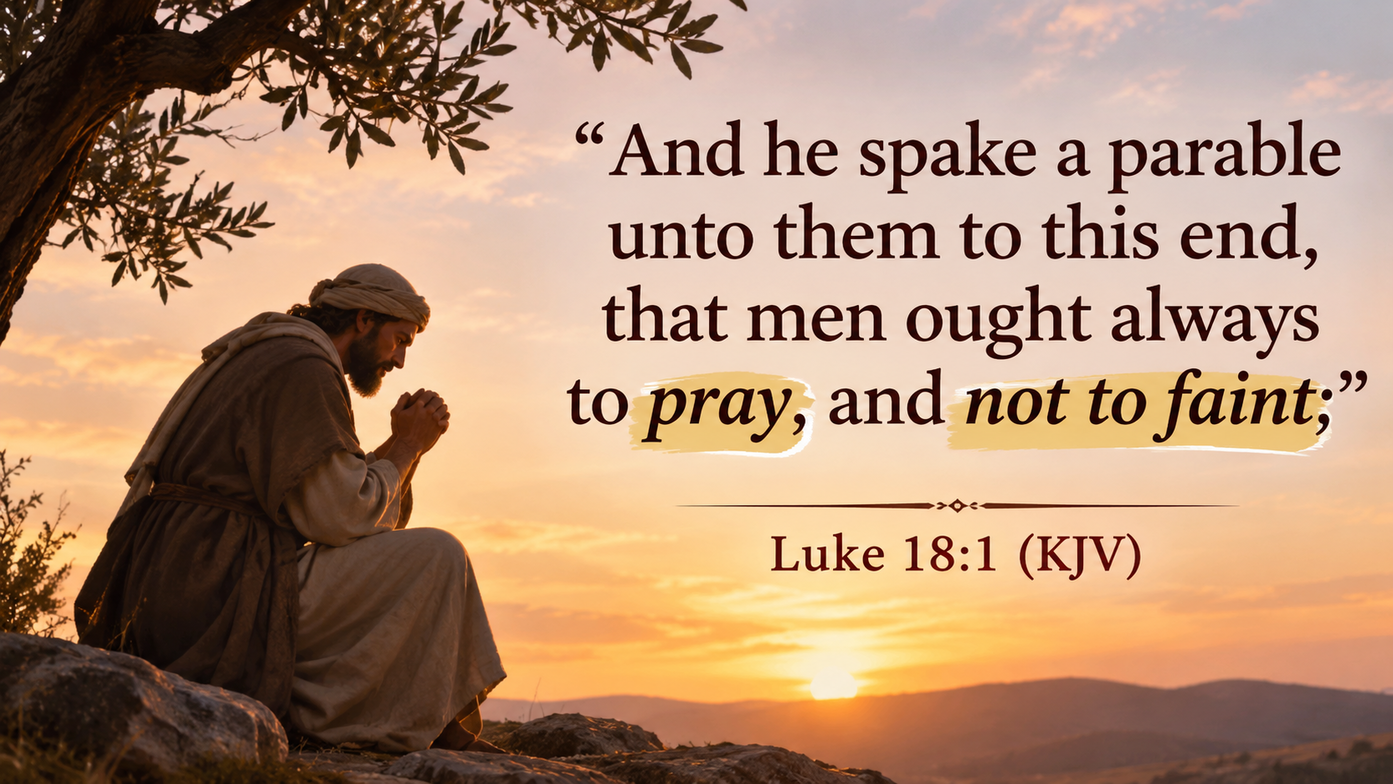
Luke tells us the purpose of the parable before the story begins.
Jesus wants us to pray without losing heart. That's what "not to faint" means here.
A widow comes to a judge asking for justice against someone who has wronged her.
The judge doesn't fear God or care about people, and for a while he refuses to help. Eventually, he agrees because he wants her to stop coming.
If we stop there, we might think Jesus is teaching us to bother God until He finally gives in.
But look at the difference Jesus draws. He calls the judge unjust, then speaks of God bringing justice for His own people who cry to Him day and night.
Even that corrupt judge eventually acts. How much more can God's people trust Him to do right?
God isn't the reluctant judge in this story. We don't have to make Him care.
Jesus speaks of His people waiting and ends by asking whether He'll find faith when He returns. His promise of justice gives them reason to keep trusting Him through that wait.
It doesn't promise that every personal request will happen quickly or exactly as we want. Continuing to pray means we're still looking to God, even when we haven't seen the answer.
Listen to the reason Jesus gives for His warning about repetition:
"But when ye pray, use not vain repetitions, as the heathen do: for they think that they shall be heard for their much speaking.
Be not ye therefore like unto them: for your Father knoweth what things ye have need of, before ye ask him."
Matthew 6:7–8 (KJV)
Notice what Jesus says.
Your Father already knows what you need before you ask Him.
Now think about that.
If God already knows what we're going through, why does He still want us to come to Him?
Because prayer was never about giving God information He didn't have.
Look at what David says.
"Trust in him at all times; ye people, pour out your heart before him: God is a refuge for us. Selah."
Psalm 62:8 (KJV)
God invites us to pour out our hearts before Him.
Not because He needs us to explain something He doesn't understand, but because we need to learn to bring our hearts to Him.
And there's another passage that helps us understand this.
"When thou saidst, Seek ye my face; my heart said unto thee, Thy face, LORD, will I seek."
Psalm 27:8 (KJV)
Notice that.
God invites His people to seek Him.
And David responds by seeking His face.
Think about how often we only come to God because we want Him to change something.
We're struggling financially, so we pray for provision.
We're going through something difficult, so we ask Him to remove it.
And there's nothing wrong with asking God for help.
But what if the only time we speak to Him is when we need something?
Sometimes we're so focused on getting an answer that we forget we're coming to the One who already knows us.
Coming to God isn't about helping Him understand us better. It's about growing in our understanding of Him.
As we bring our worries to Him and spend time in His Word, we learn more about His character, His promises, and what it means to trust Him.
And even when our circumstances haven't changed, our understanding of God can.
That's why prayer is so important.
We don't have to come to Him with a perfect explanation or a certain number of words. He already knows what we're carrying.
He wants us to seek Him, and we're invited to come to Him because of the relationship we have through Jesus Christ.
Jesus Himself shows us that repeating a request can be faithful prayer. In Gethsemane, facing His coming suffering and death, He prayed:
"And he went a little farther, and fell on his face, and prayed, saying, O my Father, if it be possible, let this cup pass from me: nevertheless not as I will, but as thou wilt."
Matthew 26:39 (KJV)
Jesus asked whether He could be spared the suffering ahead while yielding to His Father's will.
Later in that same account, we read:
"And he left them, and went away again, and prayed the third time, saying the same words."
Matthew 26:44 (KJV)
Jesus didn't need fresh wording to make that prayer sincere. He brought the same request while remaining willing to obey His Father.
Asking again didn't mean refusing the Father's will, and accepting His Father's will didn't mean He had to stop asking.
That helps us hear this instruction without turning prayer into another burden:
"Pray without ceasing."
1 Thessalonians 5:17 (KJV)
We don't have to speak twenty-four hours a day to fulfill a religious obligation.
We can keep coming to God because we have a relationship with Him through Jesus Christ.
And that relationship isn't something we're trying to earn by praying enough.
Jesus already accomplished our salvation through His death and resurrection.
We come to the Father through Him, trusting what Christ has done for us.
So when an unresolved need comes back to mind, we can bring it to Him again.
And we can also come to Him when nothing is wrong.
To give thanks, to seek His wisdom, and to understand His Word.
Because prayer isn't only about receiving what we've asked for.
It's also an opportunity to keep learning who God is and why we can trust Him.
When The Same Request Comes Up Again
Bring God the concern you're still carrying. You don't need to invent a different way to say it.
Tell Him what you're asking for and where the waiting has been difficult.
If you catch yourself adding words because you're afraid He won't listen otherwise, remember what Jesus said about the Father already knowing your need.
You can finish your prayer without reaching a certain length.
And before you finish, think about what you're actually seeking.
Are you only asking God to change your circumstances, or are you also coming to Him to understand His heart?
Take a moment to read a passage of Scripture and consider what it teaches you about Him.
Ask Him to help you trust His will even as you tell Him what you hope will happen.
When you pray again, you don't have to apologize for still needing His help.
And you don't have to wait until something goes wrong to seek Him.
PRAYER
Precious Father,
Thank You for hearing us and knowing our needs before we ask.
Thank You that we can come to You through Jesus Christ, not because we've earned Your attention, but because of what He has already accomplished for us.
When the same concern comes back, help us bring it to You without wondering whether we've said enough.
Sometimes we're so focused on receiving an answer that we forget to seek You.
Help us grow in our understanding of Your heart and learn to trust You even when our circumstances haven't changed.
Keep us from losing heart, and teach us to ask honestly while yielding to Your will, as Jesus did.
In Jesus' wonderful name we pray. Amen.