If we know right from wrong, why does morality need God?

If We Know Right From Wrong, Why Does Morality Need God?
People who don't believe in God can recognize injustice and do good for someone else. We don't have to deny that to believe the Bible.
If we can know right from wrong without Christian faith, though, what does God have to do with morality?
Paul addresses people who hadn't received the law God gave through Moses. He calls them Gentiles, meaning people who weren't Jewish:
"For when the Gentiles, which have not the law, do by nature the things contained in the law, these, having not the law, are a law unto themselves: Which shew the work of the law written in their hearts, their conscience also bearing witness, and their thoughts the mean while accusing or else excusing one another;)"
Romans 2:14-15 (KJV)
Without having received that law, these people could still recognize and do things it required.
Their conscience bore witness to right and wrong as their thoughts accused or excused them. Paul acknowledges that moral awareness rather than pretending it belongs only to people who know the Scriptures.
When he says they're "a law unto themselves," he isn't giving each person permission to decide what goodness means.
His next words explain that their conduct shows the work of the law in their hearts. They can recognize a standard they didn't write.
That distinction matters because Paul is speaking about judgment. In the surrounding passage, both those who received the law and those who didn't are accountable to God.
Hearing His commands doesn't excuse disobedience, and never having received those commands doesn't put someone beyond His judgment.
Paul carries that thought through to verse 16:
"In the day when God shall judge the secrets of men by Jesus Christ according to my gospel."
Romans 2:16 (KJV)
Conscience bears witness, but God judges. A conscience can accuse us or offer a defense, yet neither response gives us the final say.
God knows even what we keep hidden, so persuading ourselves that a decision is right cannot settle whether it actually is.
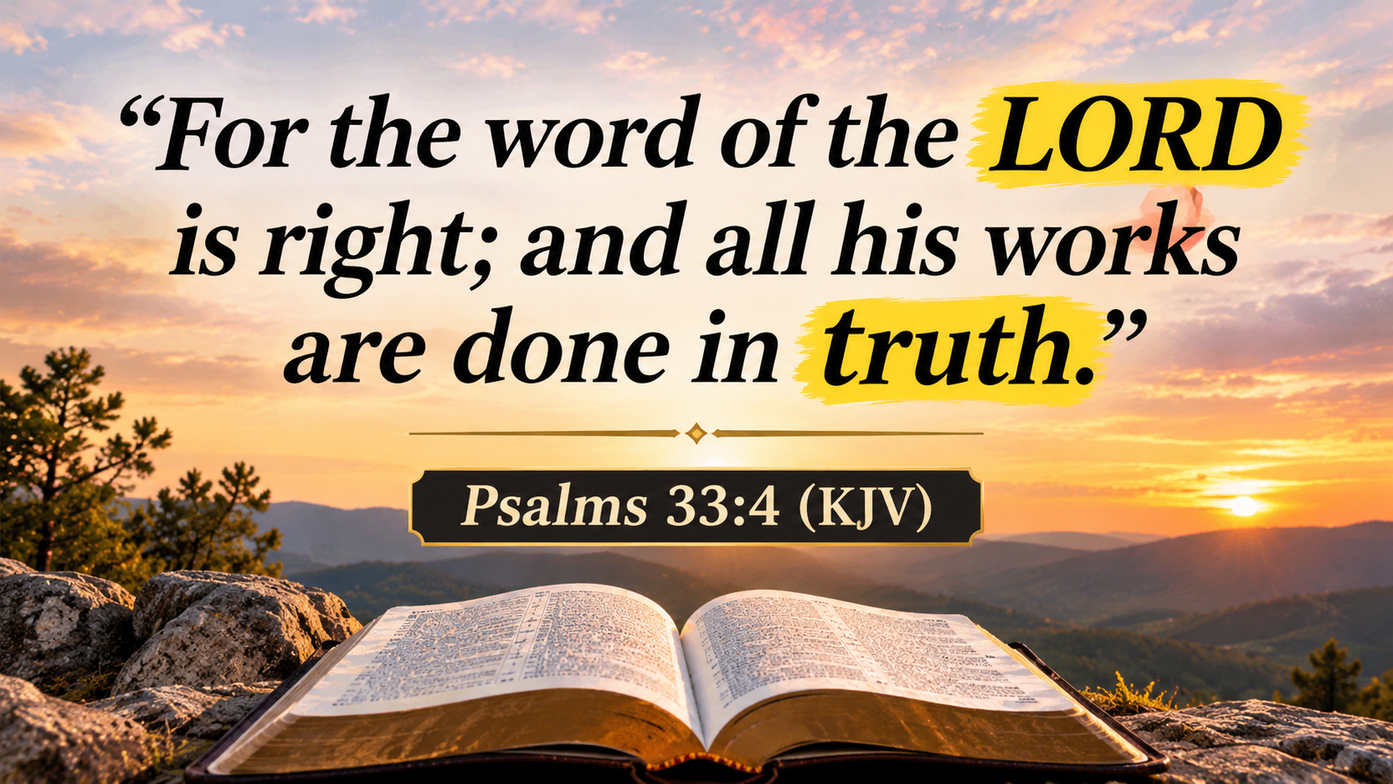
Psalm 33 helps us understand why God has that authority. His Word is right, and His works are done in truth.
The next verse says:
"He loveth righteousness and judgment: the earth is full of the goodness of the LORD."
Psalms 33:5 (KJV)
God's judgment agrees with His truthful character. Goodness doesn't depend on our approval or change to suit what we want.
Someone can recognize goodness without acknowledging God, but recognizing it doesn't make that person its source. Believing in God doesn't make us the source either.
Imagine taking credit at work for something someone else did. A friend tells you it's dishonest, but you defend it because you need the promotion.
You might even persuade yourself that providing for your family makes it acceptable.
Your family's needs matter. They don't make the claim about who did the work true.
God's Word and works are truthful, so we cannot appeal to Him to justify a lie simply because it helps us.
If someone else took credit for our work, we would probably have much less trouble recognizing the wrong.
That example doesn't prove God's existence or answer every question about morality. It helps us see how easily we can recognize a standard and then excuse ourselves from it.
Our ability to explain why we wanted an advantage is different from showing that taking it was right.
Knowing right from wrong, then, doesn't remove our need for God. He remains the judge of the goodness we recognize and the choices we defend.
That should make us willing to be corrected, including when we're certain we're right.
Being a Christian doesn't make every judgment we hold correct, and better behavior cannot earn salvation. We need God's grace as we let His Word challenge the excuses we've grown comfortable with.
When You Have a Reason to Excuse It
Think of one choice you're defending that someone else has questioned. Write down what you're actually claiming is right and why.
If your reason is mainly what you'll gain, ask whether you'd accept that reason from someone benefiting at your expense.
Bring the specific claim to God's Word rather than looking for a verse that sounds like permission.
In the workplace example, read Psalm 33:4 and ask whether your account of who did the work is true.
If you've misrepresented someone's contribution, correct the record with the person you misled. You don't have to wait until honesty benefits you to tell the truth.
PRAYER
Heavenly Father,
Thank You that Your goodness doesn't change with our opinions.
We've excused wrong because it helped us, and we've assumed that feeling right meant we were right.
Help us receive Your correction when we would rather defend ourselves.
Give us courage to admit where we've been dishonest and tell the truth to the people we've misled.
Thank You that we can come to You for grace we could never earn.
In Jesus' beautiful name we pray. Amen.