Is this a test from God or a temptation?

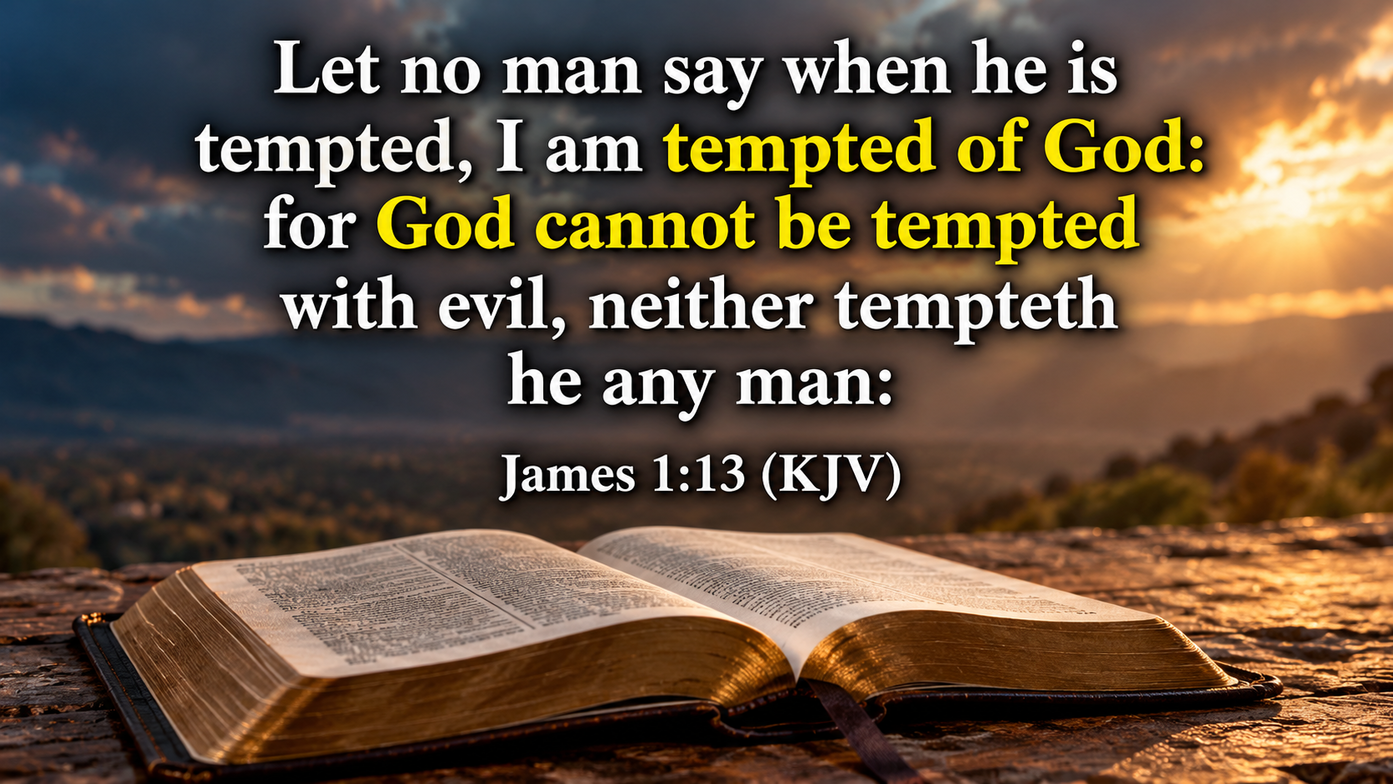
Is This a Test From God, or a Temptation?
When we're under pressure, we want to know whether God is testing our faith or we're being tempted to do something wrong. That can get confusing when the easiest way out involves a choice we know we shouldn't make.
A difficult circumstance can exercise our faith. Temptation draws us toward sin, toward believing or doing something that goes against God.
Both can happen in the same situation, so we need to separate the hardship from the response we're considering.
Earlier in the same chapter, we read:
"Knowing this, that the trying of your faith worketh patience."
James 1:3 (KJV)
"Trying" here means "testing." The patience this verse describes includes continuing to trust God while the difficulty is still there.
We learn to depend on Him even when our circumstances haven't worked out the way we wanted.
That doesn't mean every painful event was sent by God as a test. We often don't know why a particular situation happened.
James 1:13 does settle something about God's character, though. He never tries to persuade us to do evil.
We might assume we can tell the difference by how we feel. That makes sense when we're hurting and looking for relief.
The problem is that temptation can offer relief, too. A wrong choice can feel good because it promises to get us what we want, while an honest response might cost us something.
That's why we need God's Word to recognize whether the choice in front of us agrees with what God says. Hebrews describes what His Word can do:
"For the word of God is quick, and powerful, and sharper than any twoedged sword, piercing even to the dividing asunder of soul and spirit, and of the joints and marrow, and is a discerner of the thoughts and intents of the heart."
Hebrews 4:12 (KJV)
"Quick" means "alive." God's Word exposes our thoughts and motives.
We can convince ourselves that we're doing something for a good reason, but Scripture helps us see what we're actually choosing.
For example, suppose a coworker blames us for a mistake we didn't make. We want to protect ourselves, which is understandable.
We might also want to exaggerate something they've done so everyone turns against them instead.
Being falsely accused is the hardship. The temptation enters when we consider lying to get ourselves out of it.
God can grow our patience as we depend on Him through that conflict, but He isn't leading us to invent a story about somebody.
We can explain what happened truthfully and ask for help addressing it. Trusting God doesn't require us to accept a false accusation without speaking.
We can correct the facts without making up new ones to hurt the person who hurt us.
You may still feel upset after you recognize the right response. Feeling better isn't a requirement for trusting what God said.
Choosing an honest response isn't an exam you have to pass to make Him love you. Your acceptance with God rests on Jesus, who died for your sins and rose again, rather than on how well you handle pressure.
When you wonder whether you're facing a test or a temptation, look at what you're being drawn to do.
The accusation may be a difficulty through which you learn to trust God. The invitation to lie is temptation.
You don't have to know why the hardship happened to recognize that God won't lead you against His Word.
Before You Make That Choice
Take one situation you're facing today and separate what happened from what you're thinking about doing next. Be specific about the response.
"I'm under pressure" describes the difficulty. "I'm considering lying so I don't get blamed" makes the choice clear enough to examine.
Read James 1:13 with that choice in mind. Even if lying feels like relief, God has already told you He won't lead you toward evil.
Ask Him for wisdom about an honest response, then consider what you can say truthfully before you answer.
If you're unsure what Scripture says about your situation, bring the actual choice to your pastor and ask to work through the relevant passage together. Be willing to receive what the Word says even if it challenges the answer you wanted.
PRAYER
Father God, when I'm under pressure, I want relief so badly that I can talk myself into a wrong choice.
I can treat the easiest way out as if it must be Your answer.
Today I bring You the decision I'm facing.
Help me receive what Your Word says, even when my feelings argue with it.
Give me wisdom to respond without using my pain as a reason to hurt somebody else.
I trust You to help me through this difficulty.
In Jesus' mighty name we pray. Amen.