Why did Jesus teach in parables?

Why Did Jesus Teach in Parables?
We expect a story to make a lesson easier to understand. That's why Jesus' parables can confuse us.
We can follow the story about a farmer planting seed and still wonder what He wants us to hear.
A parable uses a familiar picture to teach spiritual truth. It makes sense that Jesus would use something people recognized.
But why wouldn't He explain everything plainly from the beginning?
His disciples, the followers learning directly from Him, asked that question too. In Matthew 13:10, they came to Jesus wanting to know why He spoke to the people in parables.
Jesus began His answer this way:
"He answered and said unto them, Because it is given unto you to know the mysteries of the kingdom of heaven, but to them it is not given."
Matthew 13:11 (KJV)
The "mysteries" are truths about God's kingdom that we need Him to reveal.
His disciples were being given understanding. They depended on Jesus to explain what they couldn't work out themselves.
His answer also tells us that some people heard the stories without being given that understanding. That's the difficult part, and Jesus explains the condition of those listeners:
"Therefore speak I to them in parables: because they seeing see not; and hearing they hear not, neither do they understand."
Matthew 13:13 (KJV)
We can hear somebody clearly and still refuse to receive what they're saying. We might understand a correction well enough to argue with it, while having no intention of accepting it.
In verse 15, Jesus describes people whose hearts had become unresponsive to God. Their ears were dull, and they had closed their eyes.
He's addressing resistance that was already there. The parables taught the truth of God's kingdom while also leaving it hidden from people who were resisting Him.
Hearing a familiar story didn't automatically mean receiving its truth.
That doesn't mean every question is rejection. The disciples came to Jesus with a question, and He answered them.
He then explained the parable of the sower, the person planting the seed. Their need for an explanation didn't stop Him from teaching them.
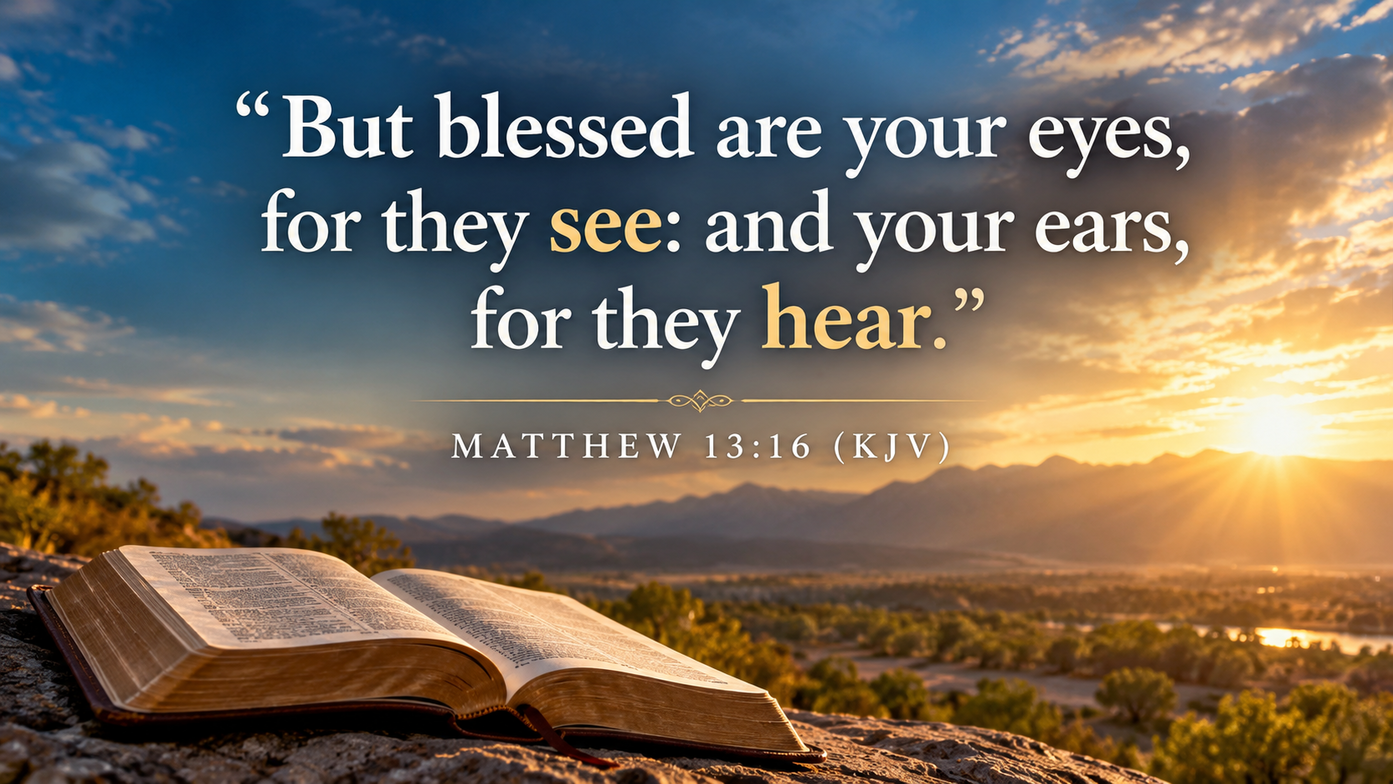
That's why the blessing in our opening verse matters. Jesus called His disciples blessed because they could see and hear what He was making known.
Understanding was a gift, not proof that they had figured everything out on their own.
His explanation of the seed develops that same lesson: people can hear the same message and receive it very differently.
In Matthew 13:18-23, the different kinds of ground represent people hearing the message of God's kingdom. Some hear without understanding, and the wicked one takes away what was sown in their hearts.
Others receive the message with joy but have no root. When trouble or persecution comes because of the message, they turn away.
Jesus also describes seed among thorns:
"He also that received seed among the thorns is he that heareth the word; and the care of this world, and the deceitfulness of riches, choke the word, and he becometh unfruitful."
Matthew 13:22 (KJV)
We can recognize those thorns in the worries that take over our attention and the belief that more money will finally make us secure.
We may understand the words we're reading, yet barely consider what Jesus says when making decisions. His picture helps us recognize how those concerns can crowd out the message we've received.
The good ground hears and understands the Word, which then produces fruit. Jesus gives us the meaning of the picture so we can examine how we're listening, without inventing a secret meaning for every detail.
If you're struggling to understand a parable, that struggle alone doesn't mean God has rejected you. Jesus died for our sins and rose again.
Our salvation is received by faith in Him, not earned by understanding every story. We can trust Him while we still have questions.
Make Room To Hear This Parable Today
Read Jesus' explanation in Matthew 13:18-23. If a part confuses you, write down the specific question and ask God for help.
You can bring that question your pastor and ask him to walk through the passage with you.
Then consider the thorns Jesus describes. Name one worry that's been taking over your attention.
If you're depending on money to settle every fear, bring that concern to God before making your next decision about it. Ask Him to help you handle your responsibilities without expecting money to provide the security only He can give.
PRAYER
Father God, sometimes I feel embarrassed that I still need an explanation.
I can let that frustration keep me from listening.
Today I bring You my questions instead of pretending I understand.
Help me receive what Jesus teaches without deciding ahead of time what the answer has to be.
When worry takes over my attention, help me trust You and give Your words room to shape my decisions.
Thank You that I can come to You while I'm still learning.
In Jesus' precious name we pray. Amen.